The province of Newfoundland and Labrador was on my “Canada – must see” list long before the amazing tourism commercials made everyone fall in love with it.
With place names such as Heart’s Desire, Happy Adventure and Come By Chance and their very unique use of the English language it’s hard not be charmed. “How ya gettin’ on, b’y? Best kind”
We only had one week for our itinerary so I focused on the west coast and plotted out what I thought was a good overview of the area. We flew into Deer Lake, picked up the rental car and started driving up the Viking Trail – in the rain . . . and fog.
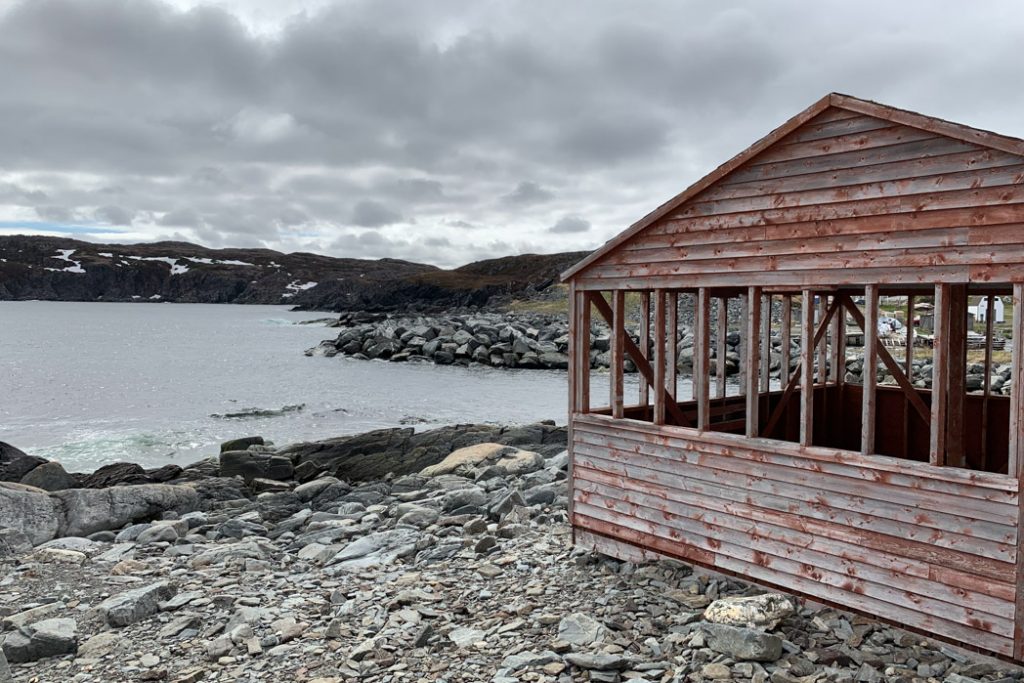
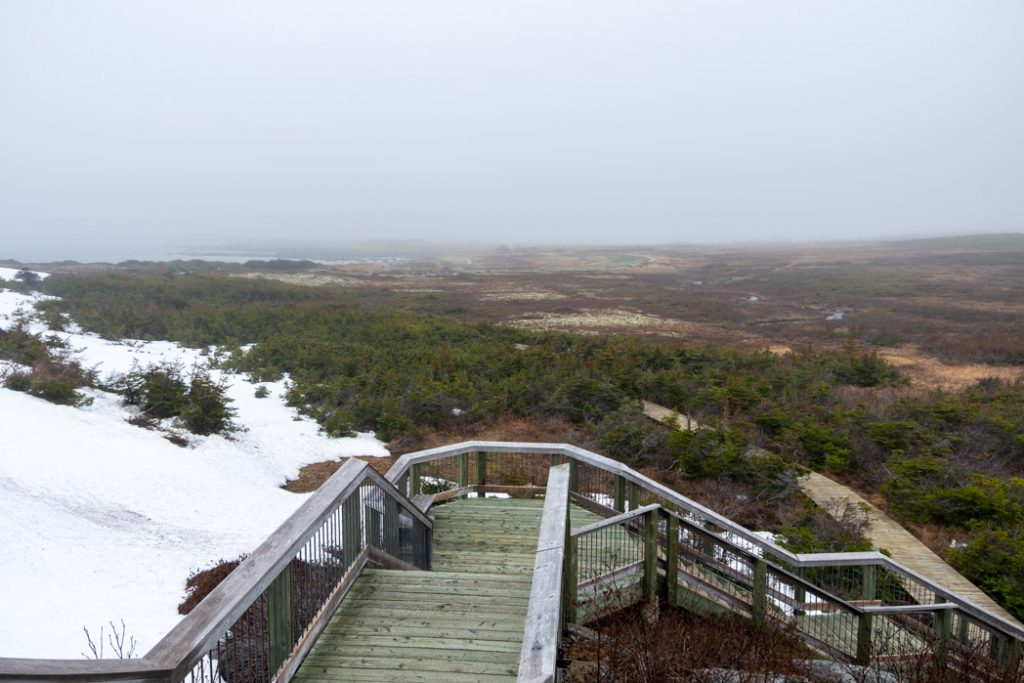
Everything you read online about Newfoundland and Labrador weather makes it sound pretty grim. It wasn’t all day, every day rain and fog but it was an influencing factor. Where I might normally have jumped out of the car to get a picture, I thought twice about the cold rain and flat sky that was waiting for me outside. Oh – and did I mention there was still snow?
St Anthony and area
St Anthony is at the northern end of the Great Northern Peninsula. We stayed two nights here so that we could hunt icebergs, visit L’anse Aux Meadows and explore the surrounding areas.
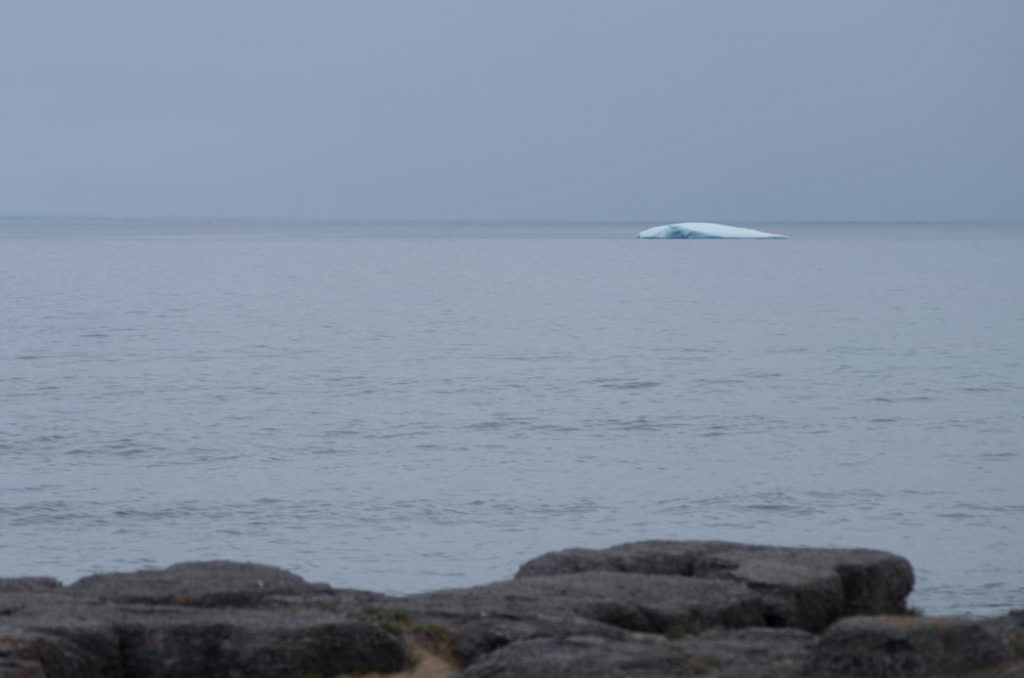
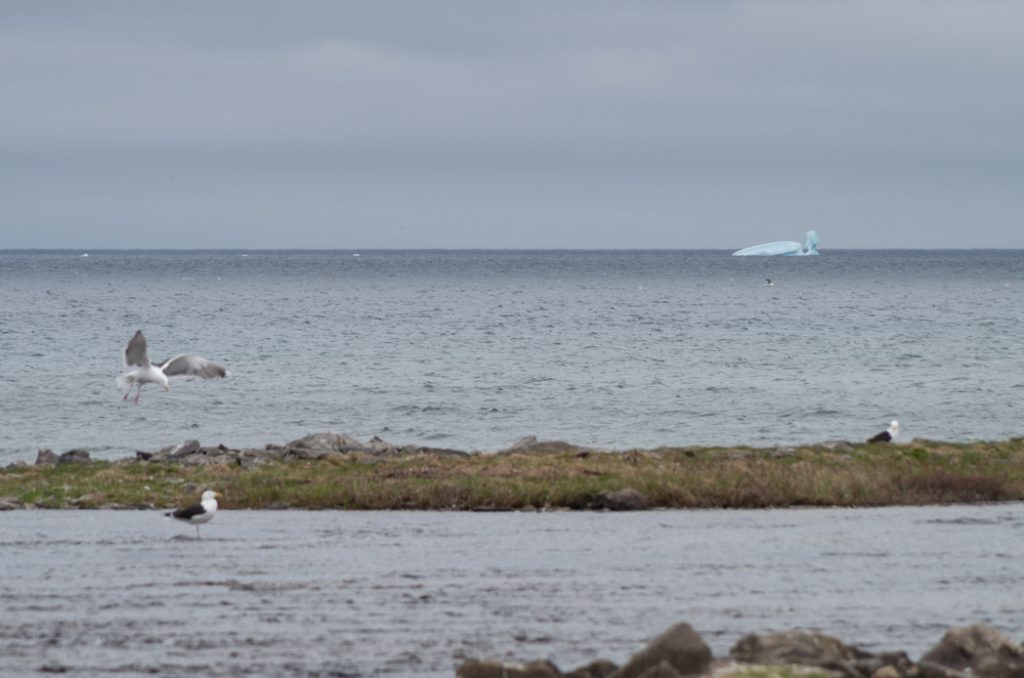
On our way north, we spotted 4 moose and our first iceberg. Then another variety once we stopped for lunch in St Anthony.
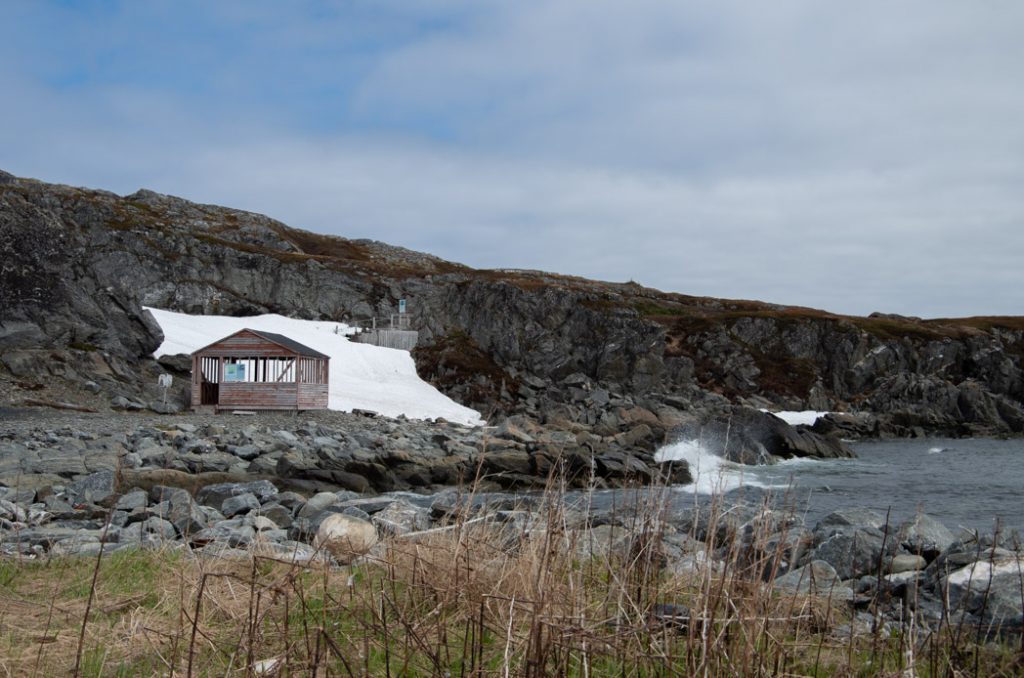
There was a short trail in Saint Carols that I was thinking might lead to a good iceberg spotting area. The snowpack, however, was still about three feet deep here.
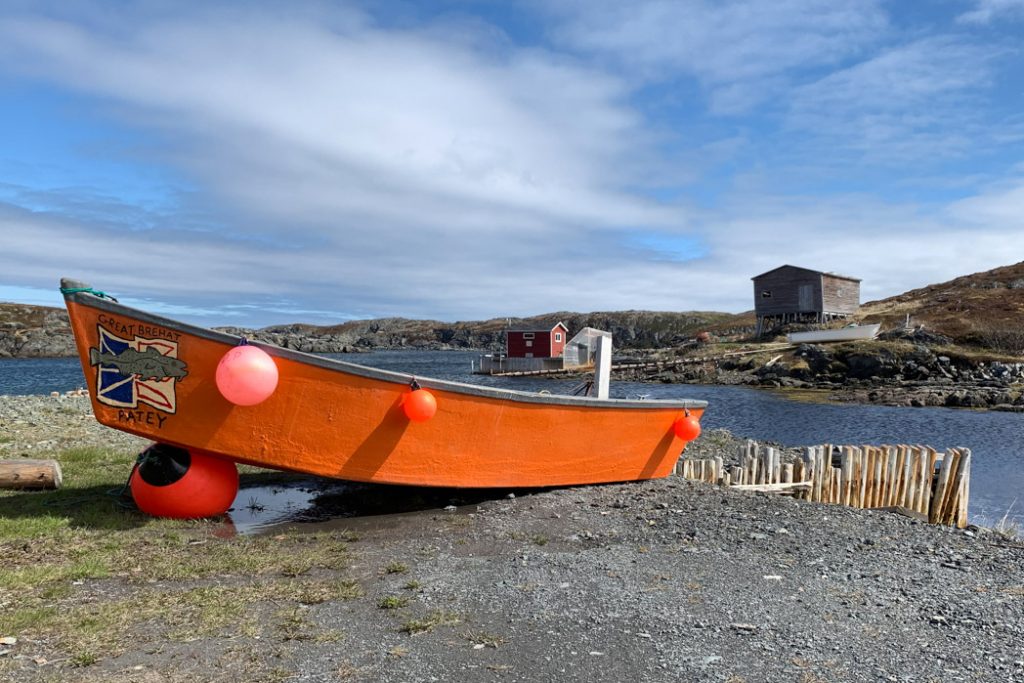
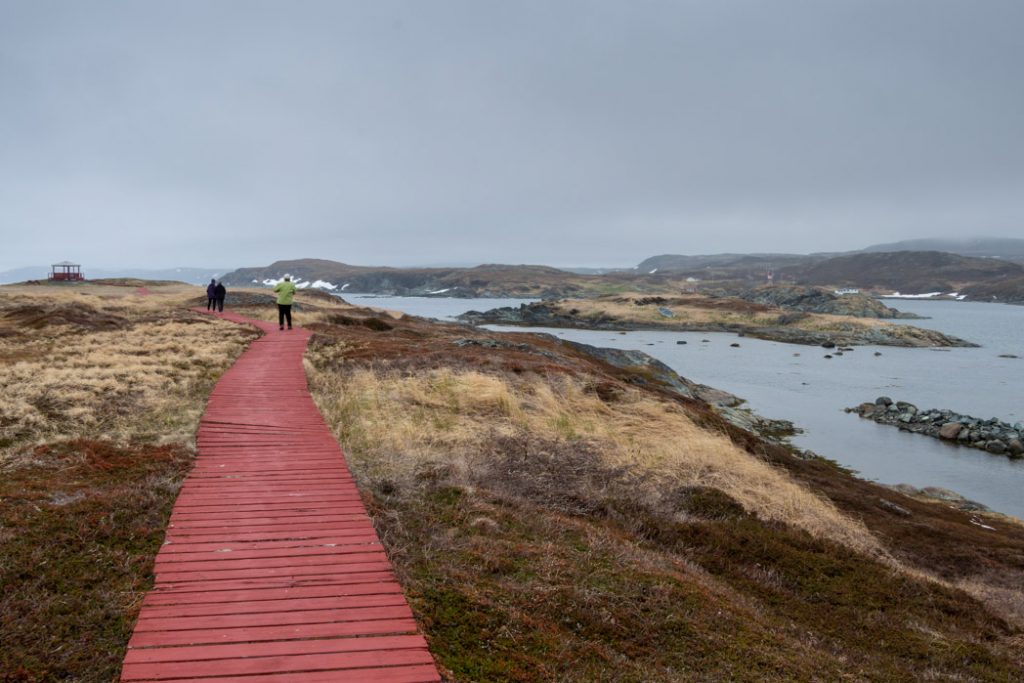
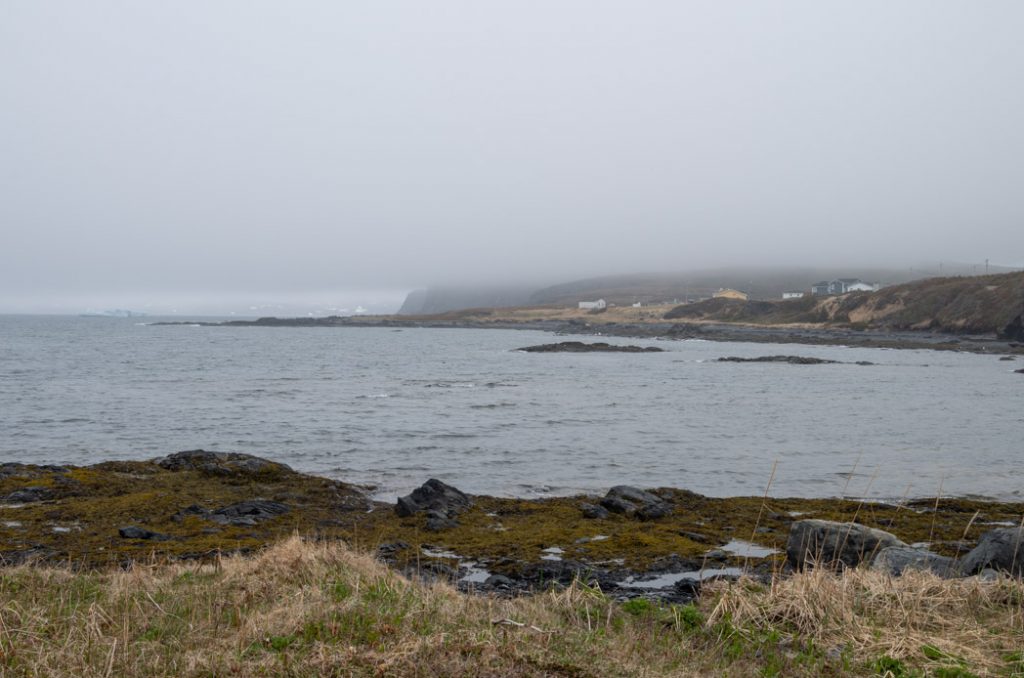
We drove on, stopping to exploring Great Brehat. This is another area of potential iceberg sightings along a trail that looked more accessible (not covered in snow). There were just a few too many steps for my ruined knee. Well worth the drive in though.
I was referencing the website IcebergFinder.com to help us in our quest. Both of these small villages had seen icebergs drifting by within the past few days.
Goose Cove was our final exploration stop for the day.
L'anse Aux Meadows
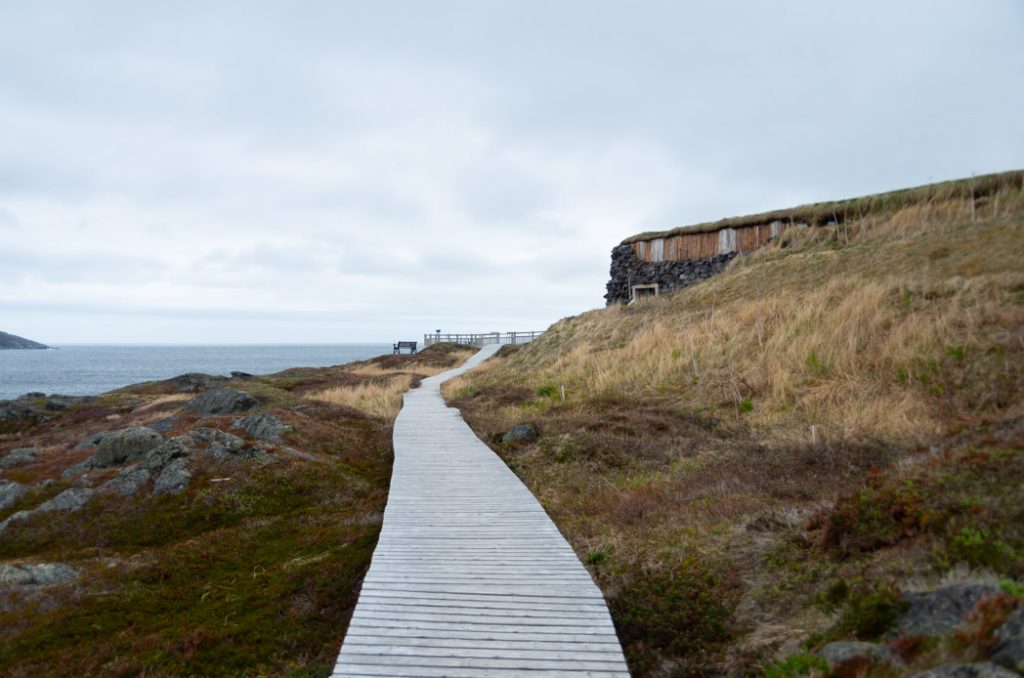
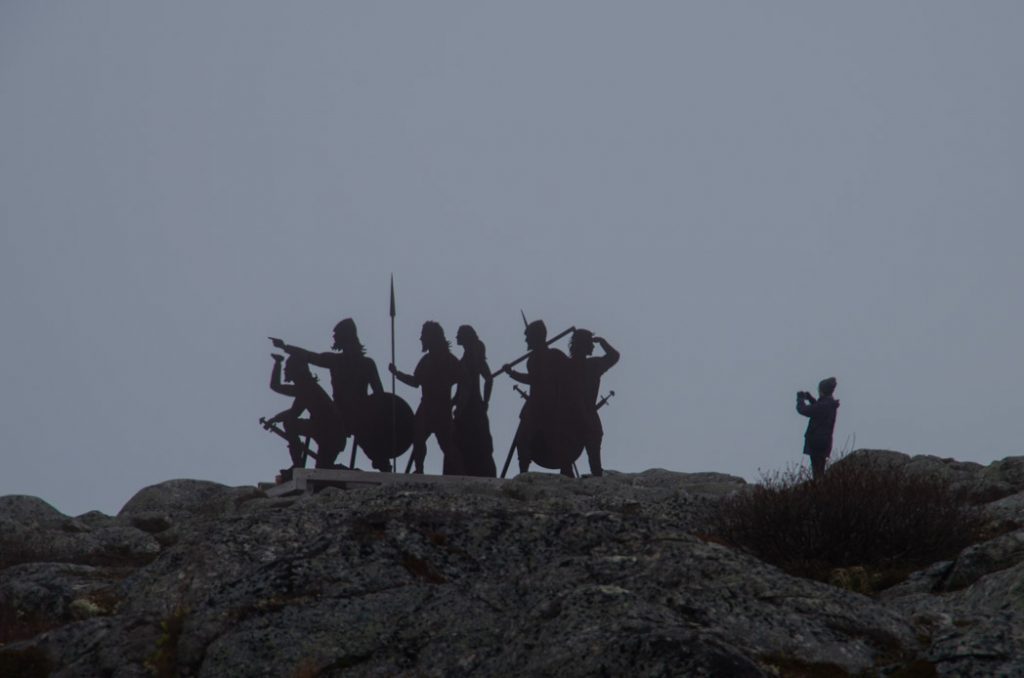
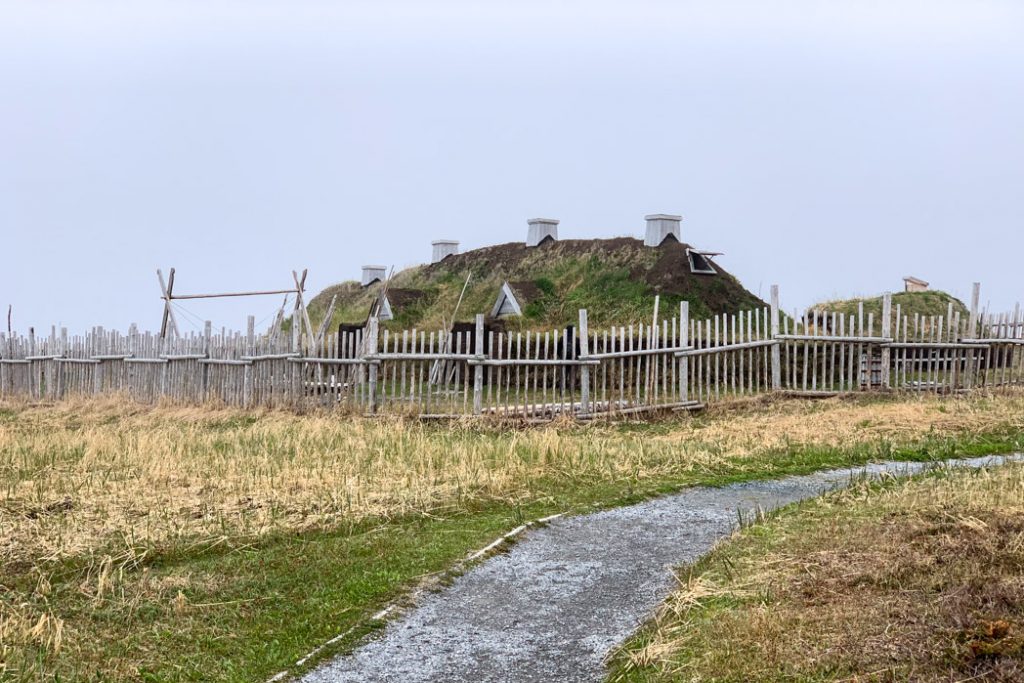
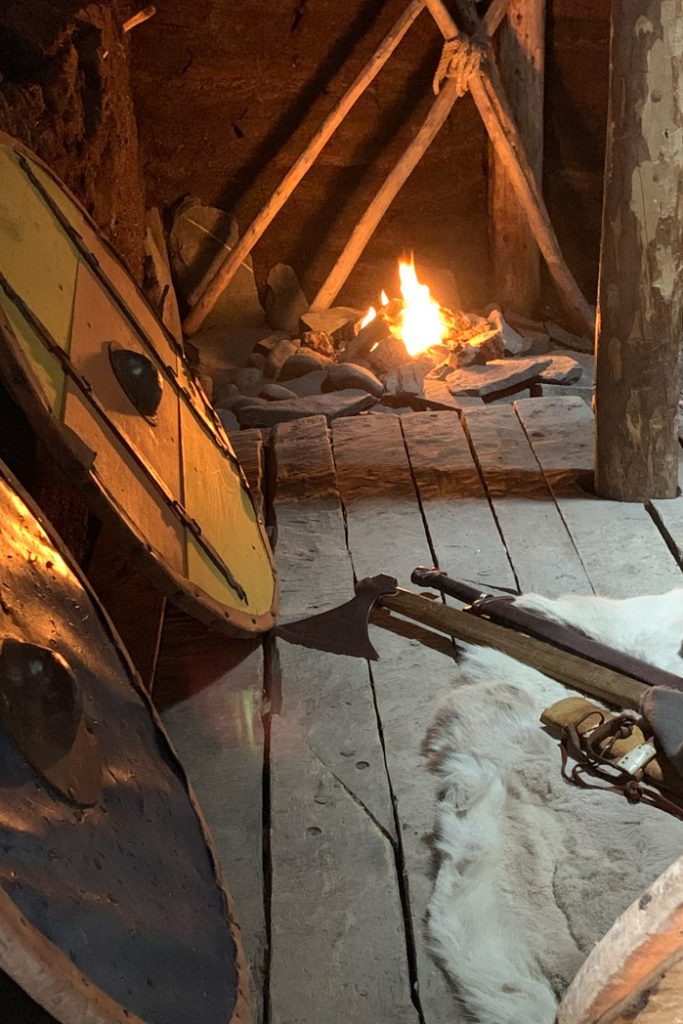
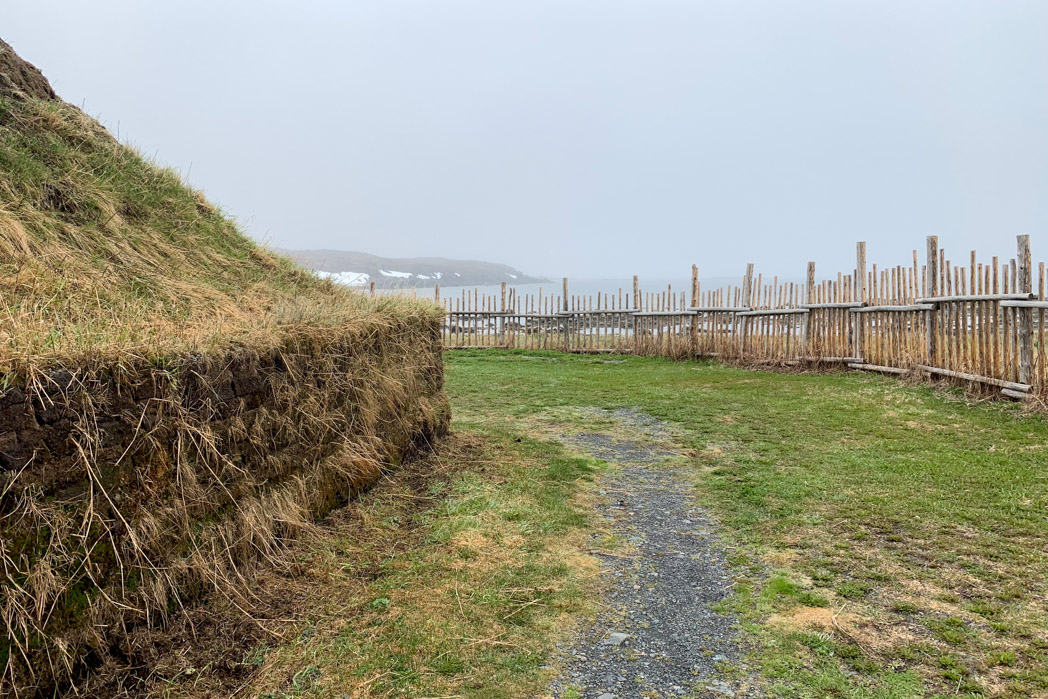
L’anse Aux Meadows is the only confirmed Viking site in North America and a UNESCO world heritage site. Our first glimpse of the Viking settlement was shrouded in fog. June is an unpredictable month for weather, but one bonus is that it isn’t yet crawling with tourists!
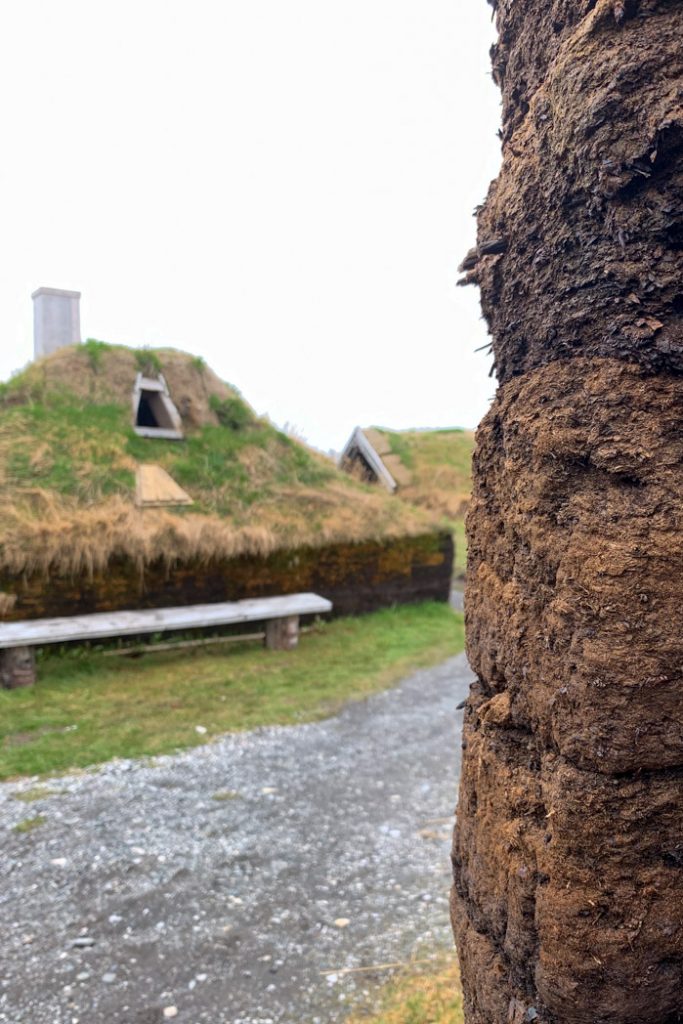
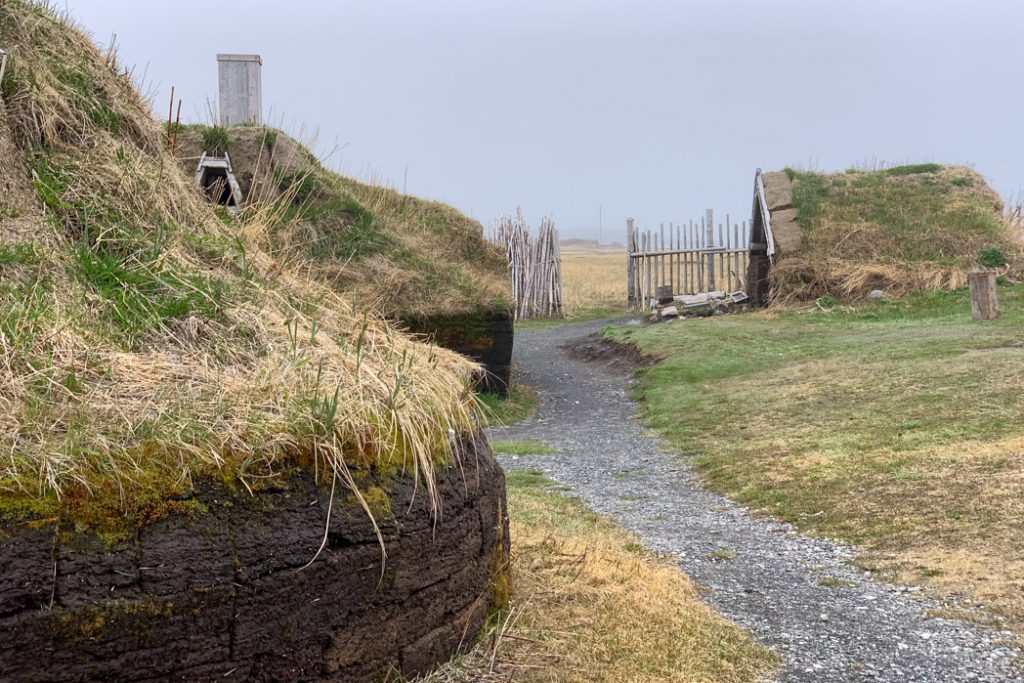
The sod huts have been re-created, complete with role-playing actors inside. It is quite an interesting experience and rather amazing that this site was only found in 1960. The structures are all made from the earth and return to the earth, leaving nothing but a small mound.
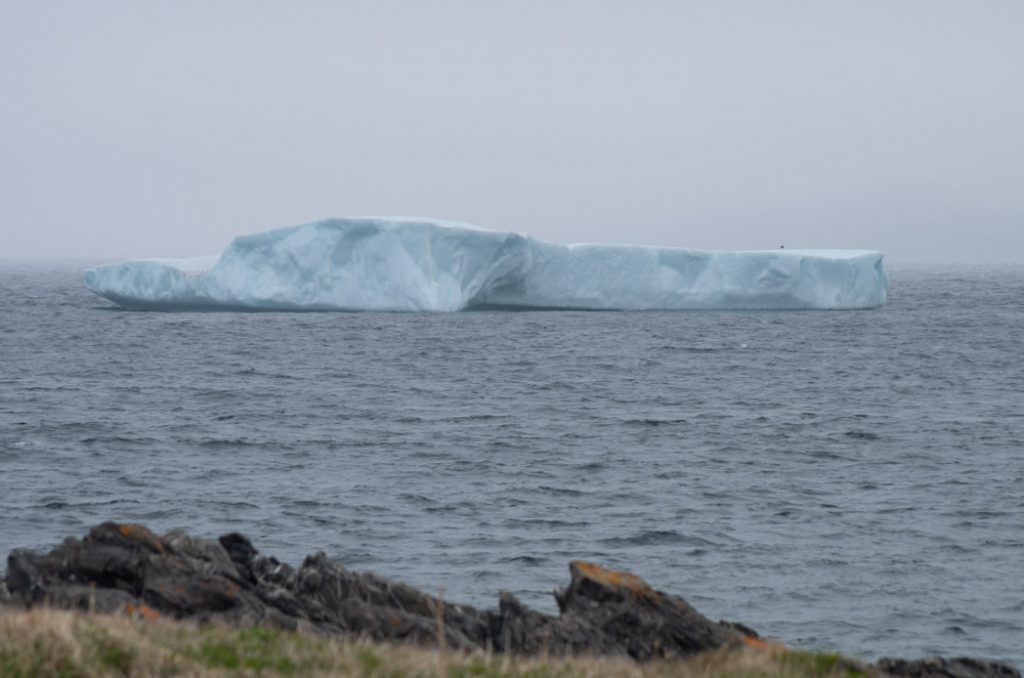
Immediately after leaving L’anse Aux Meadows, we spotted a berg in the fog. I think it was the biggest one we saw – that we could stop and take a picture of, anyway.
In Raleigh, we spotted another one that looked like it had just recently split in two.
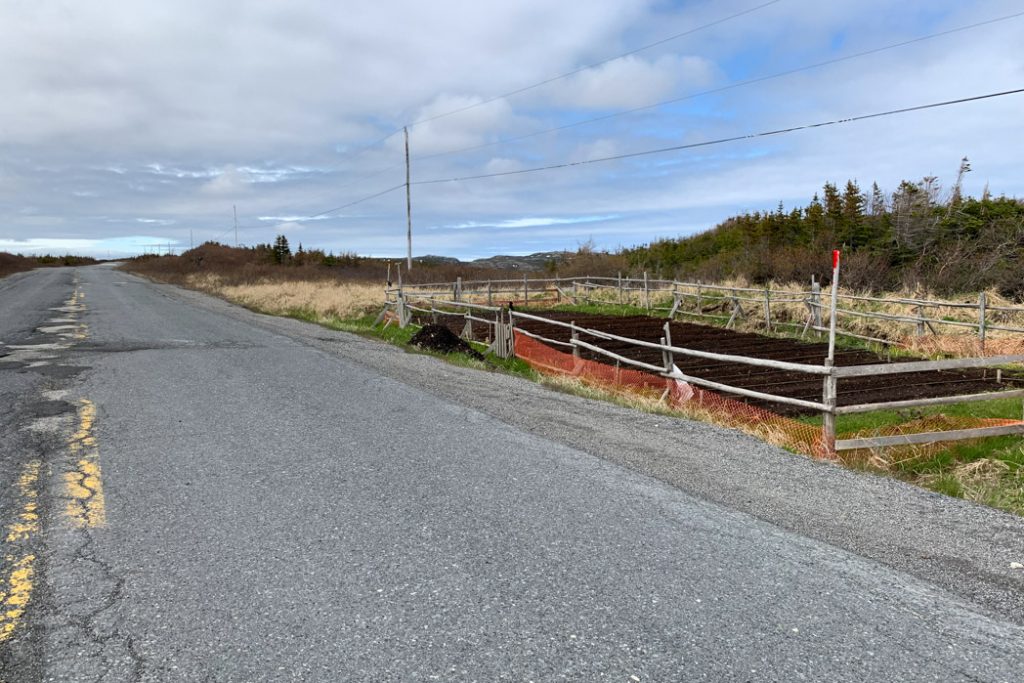
All along the highway, in the middle of nowhere and closer to towns, sit patches of mounded earth. Some have fences and some do not. We hypothesized about their use and it was later confirmed that these are gardens. Why take up space putting a garden in your own yard when you can use the roadside? After all, the highway crew has already moved all that dirt for you when they built the road.
As we headed back south, we stopped in Eddies Cove for our final iceberg sighting of the trip. It was also the end of our moose sighting. We were now up to 8.
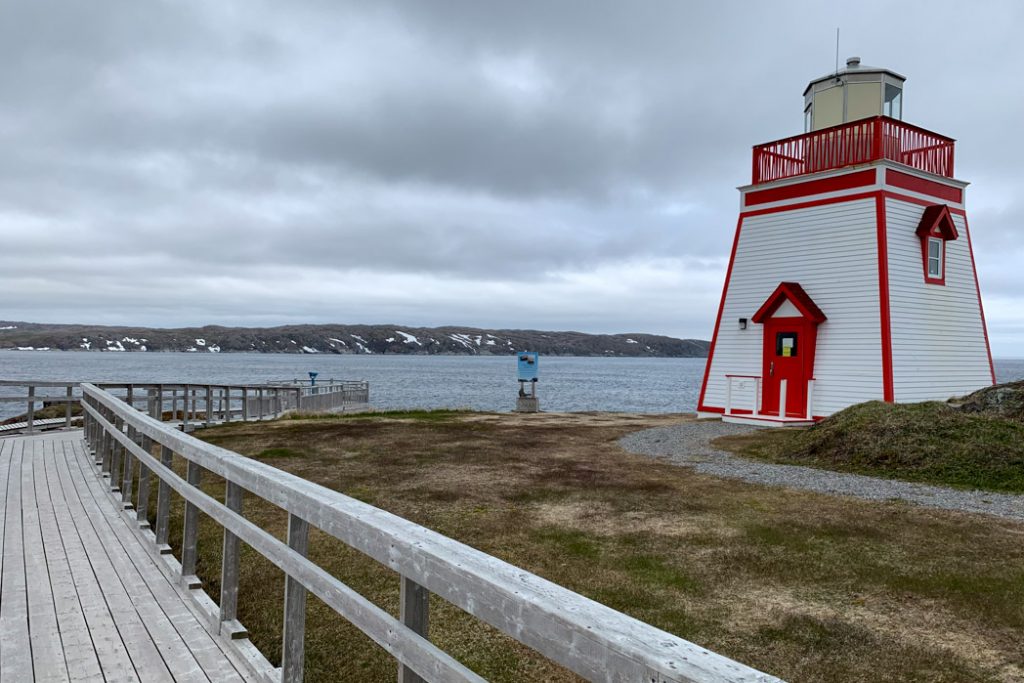
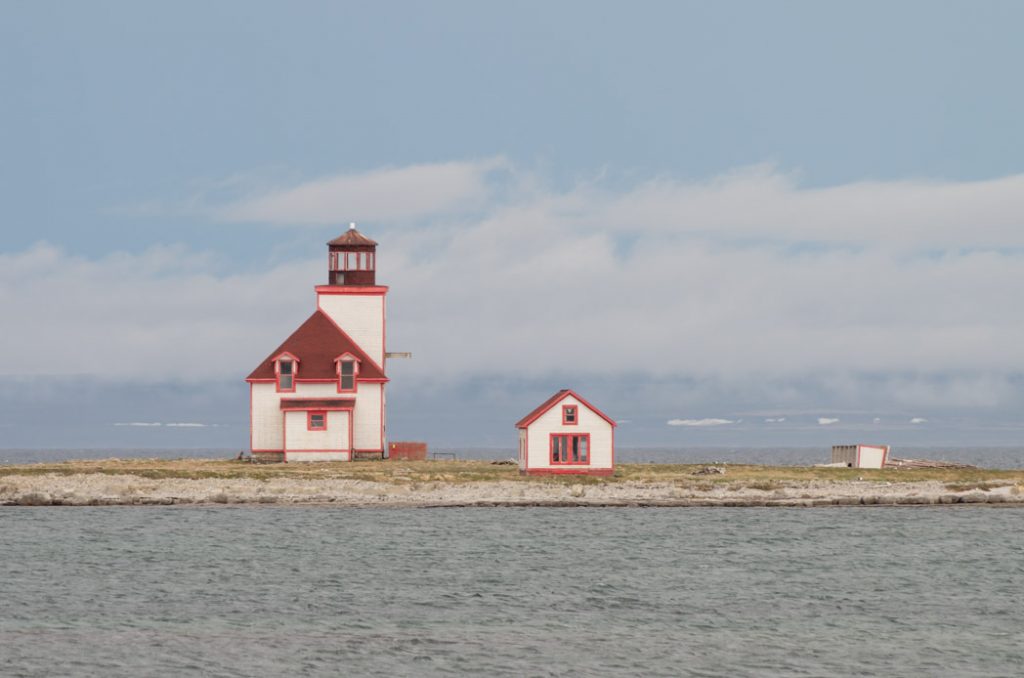
We had passed Flower’s Cove on our way north and I’d wanted to stop for a closer look an island there. The weather wasn’t cooperating that day, so I waited, hoping it would be better on the way back.
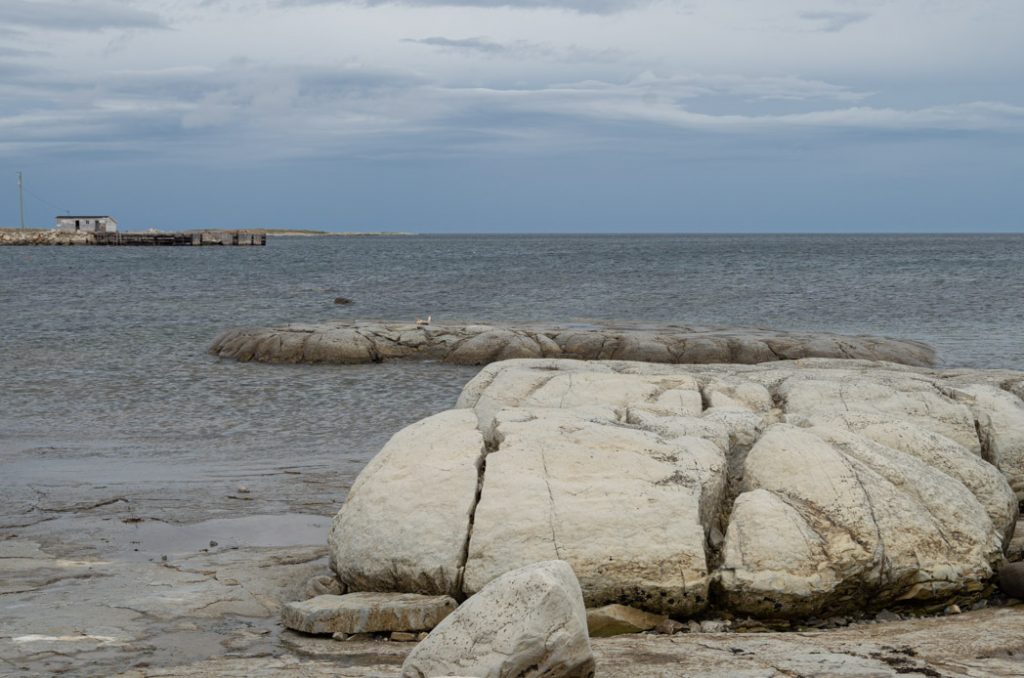
There was also a sign here for a Thrombolite walking trail. I had to look that one up since I had no idea what that even is. I still don’t, but the gist of it is that these are extremely rare examples of some of the earth’s most primitive life forms. These unicellular critters aren’t exactly fossils but are evidence of biological activity that occurred between 3.5 billion to 650 million years ago.
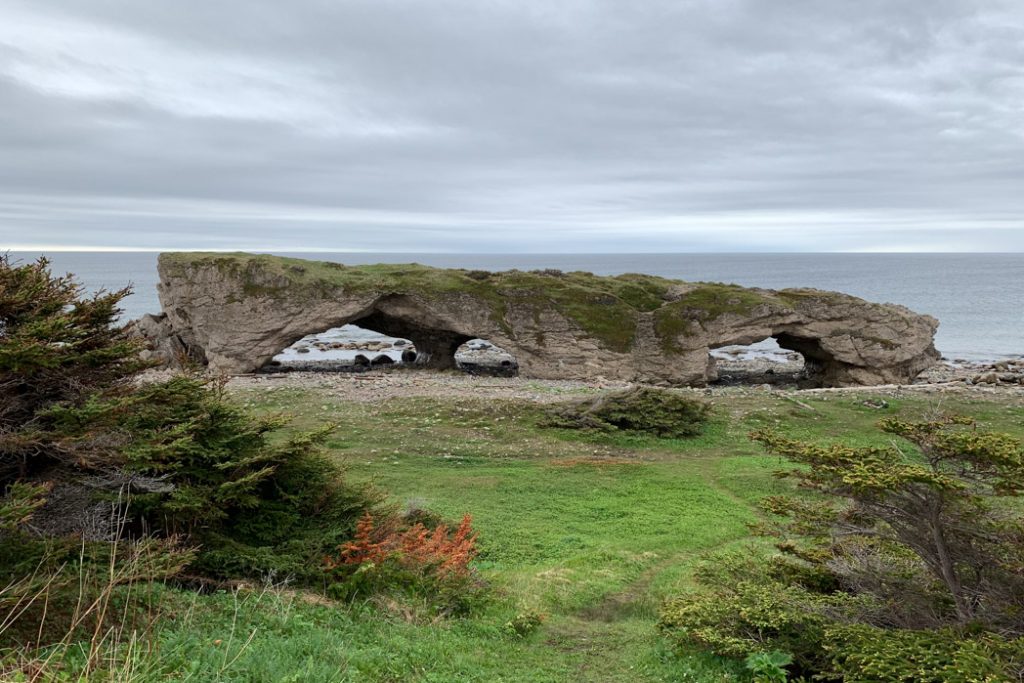
Our final stop for the day was at The Arches Provincial Park for a quick picture in the rain before spending the night in Cow Head.
It turns out the weather didn’t really hold me back from taking pictures. There are so many I want to share, I had to break this post into two parts. Next up – exploring Gros Morne National Park.
This website uses cookies to improve your experience. We'll assume you're ok with this, but you can opt-out if you wish.AcceptRejectRead More
Privacy & Cookies Policy
Privacy Overview
This website uses cookies to improve your experience while you navigate through the website. Out of these, the cookies that are categorized as necessary are stored on your browser as they are essential for the working of basic functionalities of the website. We also use third-party cookies that help us analyze and understand how you use this website. These cookies will be stored in your browser only with your consent. You also have the option to opt-out of these cookies. But opting out of some of these cookies may affect your browsing experience.
Necessary cookies are absolutely essential for the website to function properly. This category only includes cookies that ensures basic functionalities and security features of the website. These cookies do not store any personal information.
Functional cookies help to perform certain functionalities like sharing the content of the website on social media platforms, collect feedbacks, and other third-party features.
Cookie
Duration
Description
lang
1 month
LinkedIn sets this cookie to remember a user's language setting.
S
1 year 1 month
Used by Yahoo to provide ads, content or analytics.
Performance cookies are used to understand and analyze the key performance indexes of the website which helps in delivering a better user experience for the visitors.
Cookie
Duration
Description
cjae
1 year 1 month
The cookie is set by the provider Dotomi. This cookie is used to record visitor behaviour.
Analytical cookies are used to understand how visitors interact with the website. These cookies help provide information on metrics the number of visitors, bounce rate, traffic source, etc.
Cookie
Duration
Description
__gads
1 year 24 days
The __gads cookie, set by Google, is stored under DoubleClick domain and tracks the number of times users see an advert, measures the success of the campaign and calculates its revenue. This cookie can only be read from the domain they are set on and will not track any data while browsing through other sites.
_ga
2 years
The _ga cookie, installed by Google Analytics, calculates visitor, session and campaign data and also keeps track of site usage for the site's analytics report. The cookie stores information anonymously and assigns a randomly generated number to recognize unique visitors.
_ga_WB5R5VY1YV
2 years
This cookie is installed by Google Analytics.
_gat_gtag_UA_124537433_1
1 minute
Set by Google to distinguish users.
_gid
1 day
Installed by Google Analytics, _gid cookie stores information on how visitors use a website, while also creating an analytics report of the website's performance. Some of the data that are collected include the number of visitors, their source, and the pages they visit anonymously.
CJSession
session
This cookie is set by the provider CJ affiliate by Coversant. This cookie is used to track the time stamp of initial CJ related event on current browser session.
CONSENT
2 years
YouTube sets this cookie via embedded youtube-videos and registers anonymous statistical data.
Advertisement cookies are used to provide visitors with relevant ads and marketing campaigns. These cookies track visitors across websites and collect information to provide customized ads.
Cookie
Duration
Description
DotomiUser
1 year 1 month
This cookie is set by the provider Dotomi. This cookie is used for sales/lead correlation and for targeting and marketing purposes. it is used to store unique surfer ID.
DSID
1 hour
This cookie is set by DoubleClick to note the user's specific user identity. It contains a hashed/encrypted unique ID.
IDE
1 year 24 days
Google DoubleClick IDE cookies are used to store information about how the user uses the website to present them with relevant ads and according to the user profile.
test_cookie
15 minutes
The test_cookie is set by doubleclick.net and is used to determine if the user's browser supports cookies.
VISITOR_INFO1_LIVE
5 months 27 days
A cookie set by YouTube to measure bandwidth that determines whether the user gets the new or old player interface.
YSC
session
YSC cookie is set by Youtube and is used to track the views of embedded videos on Youtube pages.